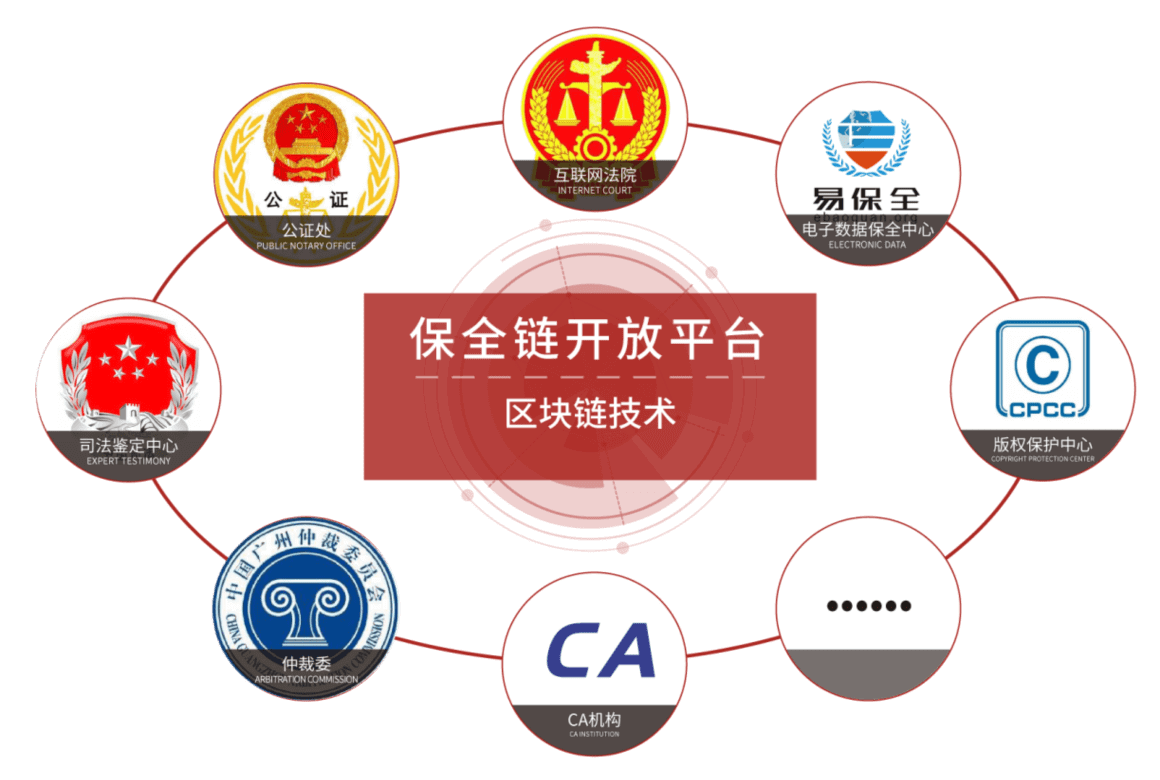
The blockchain used by the " Online Electronic Contract Signing System" is a consortium blockchain for electronic data deposit, built by FairSigning (in collaboration with judicial authentication, arbitration, and notary institutions) through initiating the China Blockchain Basic Service Alliance. It is used for decentralized deposit of electronic contracts. After a contract is signed and takes effect, the Electronic Signing Platform stores the evidence chain formed during the online electronic contract signing process on the blockchain, and conducts multi-party deposit through institutions such as judicial authentication, arbitration, and notary offices. The underlying blockchain records the complete evidence of the entire electronic contract signing process and incorporates judicial institutions into the blockchain system for simultaneous authentication, forming a complete evidence chain. This addresses issues in the current market such as weak legal probative force of single electronic contracts, susceptibility to replacement and modification.
The Online Electronic Contract Signing System uses the "Preservation Chain" (a blockchain joined by connected authoritative judicial institutions) to synchronize relevant information such as hash digests of signed electronic contract documents in real time, realizing full-process deposit recording of online electronic signing.
It adopts a distributed architecture for data encryption; calculations and interactions are completed independently among multiple nodes of encrypted data without a central control node, truly ensuring that the content of electronic contracts and related information records are tamper-proof.
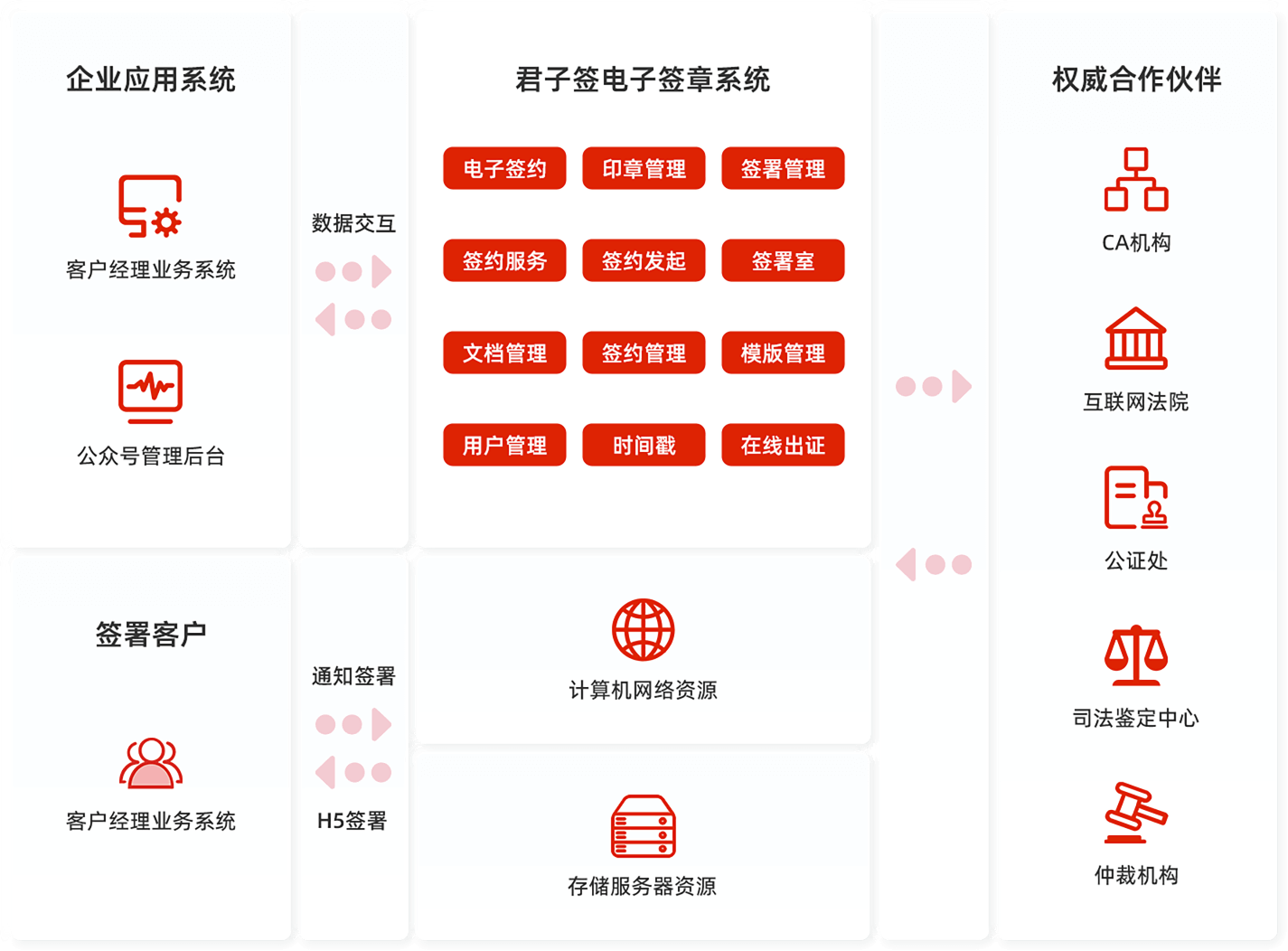
The Online Electronic Contract Signing System collaborates with national judicial institutions such as notary offices, arbitration commissions, copyright protection centers, judicial authentication centers, and CA institutions to conduct multi-node judicial recording, ensuring the reliability and authenticity of electronic data.
Among the first batch of domestic blockchain information service filing enterprises approved by the Cyberspace Administration of China (CAC)
备案号:渝网信备50011219179454790019号
In the past, in addition to "verifying the authenticity" of the source of electronic data evidence, the judicial system also had to incur certain costs for the secure preservation of data. Even if such evidence is accepted by the court, it cannot be guaranteed that it will not be lost or even tampered with due to cyber attacks or other force majeure factors during preservation. Therefore, by leveraging the characteristics of blockchain technology, electronic data evidence only needs to ensure the authenticity and reliability of its source; after being uploaded to the chain, the judicial system does not need to worry about it being tampered with or lost. This is the practical significance of applying blockchain technology in the judicial system. It is believed that blockchain technology will bring more changes in the future, and whether it is a "subversive and revolutionary" innovation or not, it will promote the development of human civilization.
On September 7, 2018, the Supreme People's Court of China issued the "Provisions on Several Issues Concerning the Trial of Cases by Internet Courts," which recognized the legal effect of blockchain deposit in the burden of proof in Internet-related cases.
Article 11 states: "If the electronic data submitted by a party can prove its authenticity through technical means for evidence collection, preservation, and tamper-proofing such as electronic signature, trusted timestamp, hash value verification, and blockchain, or through authentication by an electronic evidence collection and deposit platform, the Internet court shall confirm it." This is the first time in China that judicial interpretation has legally confirmed evidence preservation methods such as trusted timestamps and blockchain, indicating an important breakthrough in the application of electronic evidence preservation technology at the judicial level.
By connecting with judicial institutions such as notary offices, judicial authentication centers, arbitration commissions, and Internet courts, the Online Electronic Contract Signing System incorporates the entire process of electronic contract document signing, electronic signing process evidence deposit, and electronic signing data transmission into the scope of notarization. If necessary, users can apply for notarial certificates, judicial authentication reports, arbitration awards, etc. with one click online, eliminating the trouble of traditional evidence issuance and proving that the entire electronic signing process is legally recognized.

TOP